
How Mold & Mildew Damage Your Deck Over Time
What Starts as a Stain Can Become Structural — Here's What to Watch For
That dark discoloration on your deck isn't just cosmetic. Mold and mildew are living organisms that feed on the organic material in wood fibers — and once they take hold, they don't stop on their own. Left untreated, they break down the surface layer of your deck boards, accelerate rot, and create a slippery surface that becomes a safety hazard.
The good news: caught early, mold and mildew damage is completely reversible with professional cleaning. The bad news: most homeowners wait too long, and by then the damage has already set in.
This page covers what mold and mildew actually do to your deck, how to spot early warning signs, and what the right treatment looks like for wood, composite, and paver surfaces.
Call (603) 416-0017 for a Free Estimate — Available 24/7
What Mold and Mildew Actually Do to Deck Wood
It's Not Just a Stain — It's Active Damage
Mold and mildew are fungi. On a wood deck, they feed on the cellulose in the wood fibers themselves. As they grow, they secrete enzymes that break down the wood's surface structure. Over time, this causes:
• Softening and sponginess in the top layer of deck boards
• Gray or black discoloration that penetrates below the surface
• Accelerated cracking and splitting as the wood dries out between wet and dry cycles
• Loss of structural integrity in severe cases, particularly on older decks
• A slick, unsafe surface — mold growth dramatically increases slip risk when wet
On composite decking, mold doesn't penetrate the board itself but grows in the micro-pores on the surface and in the grooves between boards. It's less structurally damaging, but it still creates a safety hazard and voids some manufacturer warranties if not properly maintained.
How to Tell If Your Deck Has a Mold or Mildew Problem
You don't need to be a contractor to spot the early signs. Here's what to look for:
• Dark green, black, or gray patches on deck boards — especially in shaded areas
• A musty smell coming from the deck surface, particularly after rain
• Slippery boards when wet, even without visible growth
• Discoloration concentrated in the gaps between boards where moisture collects
• White or gray fuzzy growth on the underside of deck boards or structural members
• Staining that reappears quickly after a DIY cleaning attempt
If you're seeing any of these signs, the mold is already established. Surface scrubbing won't eliminate it — it needs to be treated at the root with the right cleaning solution.
Why DIY Methods Fall Short
Most homeowners try one of three things when they notice mold on their deck: a pressure washer, a bleach solution from a hardware store, or a scrub brush with deck cleaner. Here's the problem with each:
Pressure Washing
- High-pressure water removes surface mold but drives moisture deeper into the wood fibers — actually accelerating the conditions mold needs to thrive. It also strips the top layer of wood, leaving a rough, splintered surface that holds moisture and regrows mold faster than before.
DIY Bleach Solutions
- Household bleach kills surface mold but doesn't penetrate deep enough to treat established growth. It also strips the natural color from wood, can kill surrounding plants and grass, and breaks down the lignin in wood fibers if overused — weakening the boards themselves.
Deck Cleaner Products
- Off-the-shelf deck cleaners are formulated for general maintenance, not active mold remediation. They work fine for light buildup and annual cleaning but aren't strong enough to treat a deck that's already showing visible mold or mildew damage.
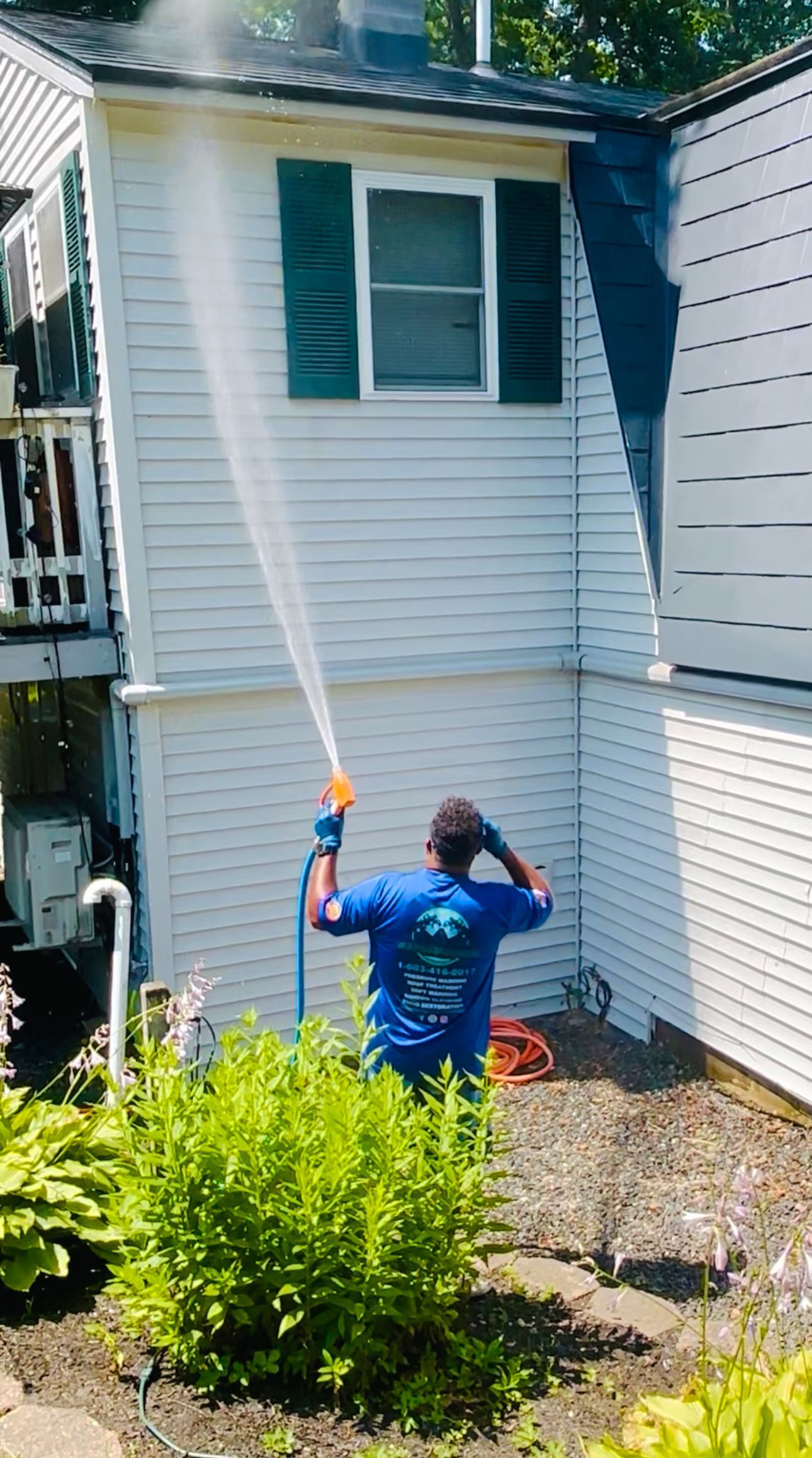
Professional soft washing uses biodegradable, surfactant-based cleaning solutions that kill mold and mildew at the root — not just the surface — and are safe for the surrounding landscape. Combined with controlled low-pressure rinsing, it removes the growth without damaging the deck structure.
The Right Treatment Depends on Your Surface
Wood Decks
Wood is the most vulnerable to mold damage. The cleaning solution needs to be strong enough to kill deep-rooted growth but applied at low pressure to avoid raising the grain or causing splintering. After cleaning, a wood deck should be allowed to dry fully before staining or sealing.
Composite Decks
Composite boards resist moisture penetration but are not mold-proof. Mold grows on the surface and in the grooves between boards. The cleaning approach is gentler — lower pressure, milder solution — and focuses on surface removal and groove cleaning. Check manufacturer guidelines, as some composites have specific cleaning requirements.
Paver Patios
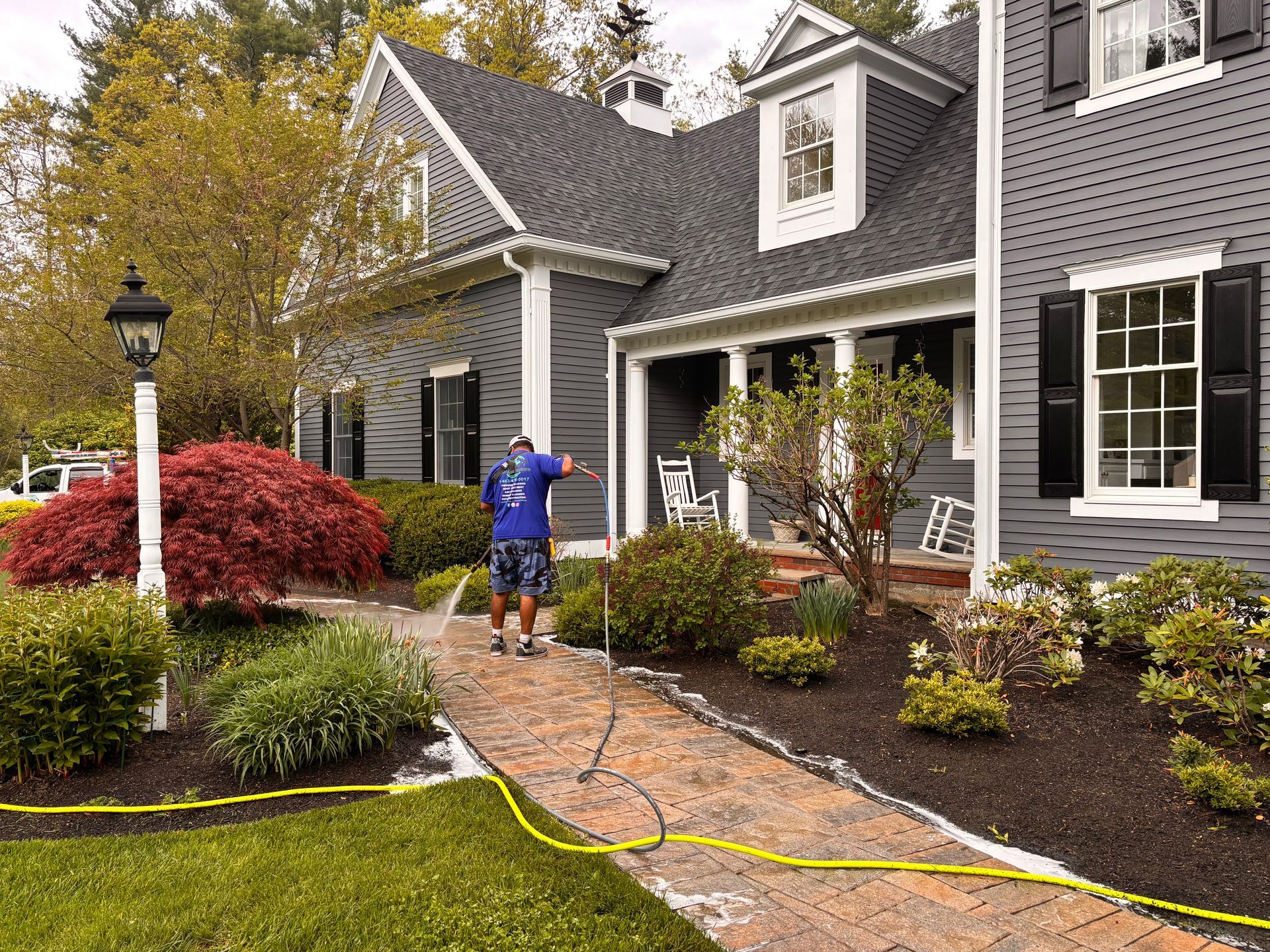
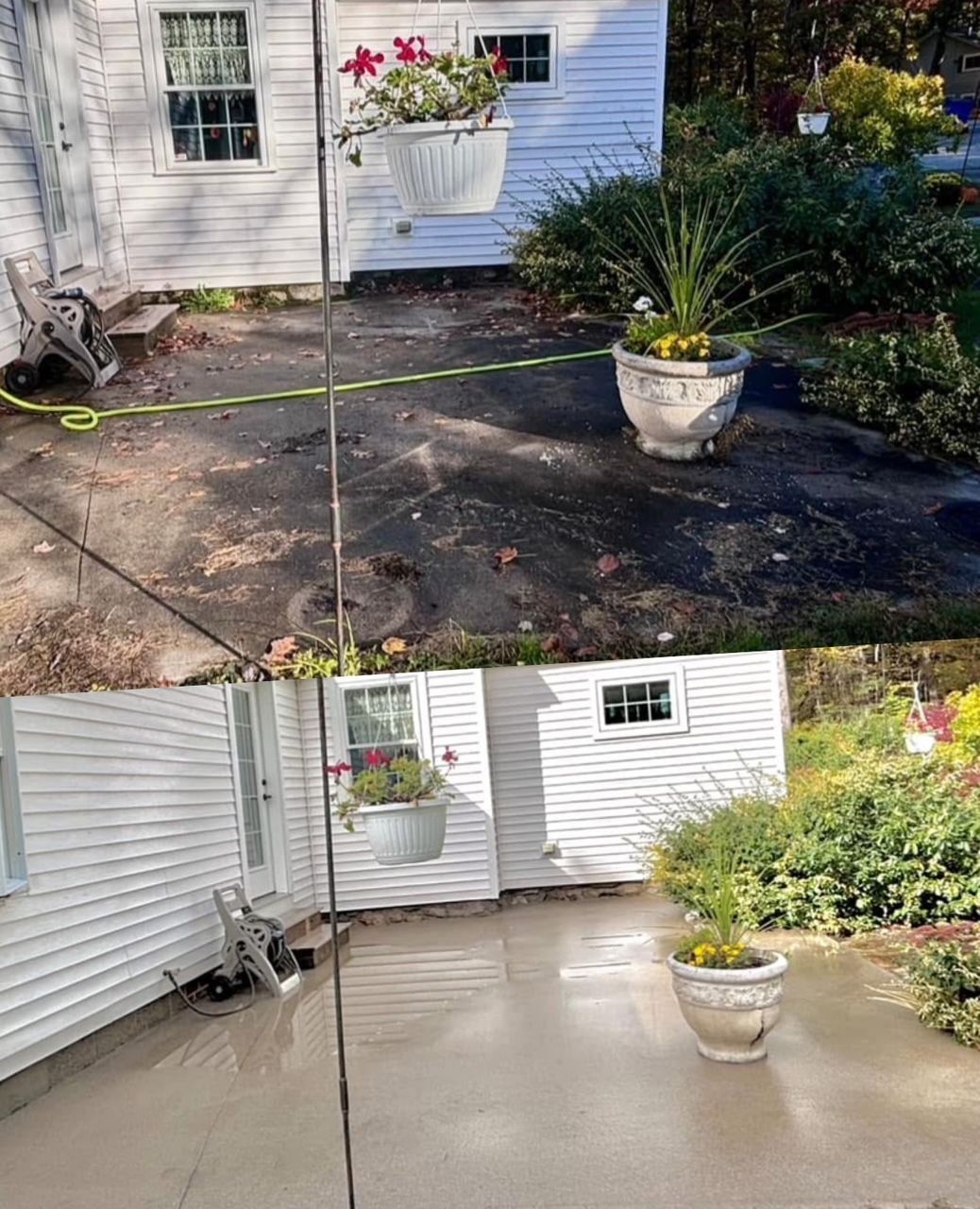
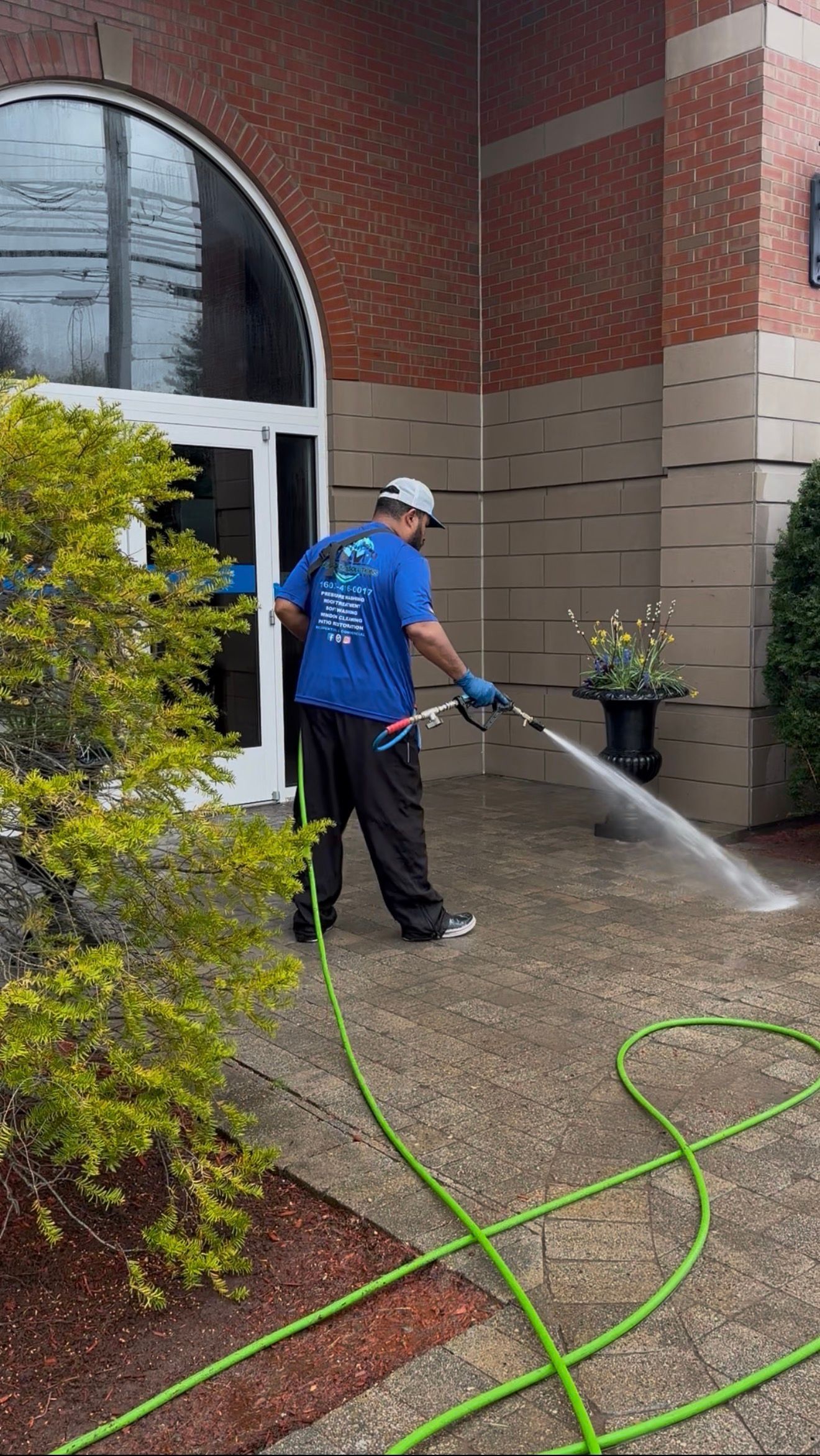
Pavers develop mold and algae growth in the joint sand and on the surface itself. Cleaning requires attention to the joints — not just the paver tops — to prevent regrowth from below. Pressure is appropriate here but needs to be controlled to avoid disturbing the joint material.
How Often Should You Clean Your Deck?
A Simple Maintenance Schedule for NH Homeowners
• Annual cleaning — minimum recommendation for any deck in NH's climate
• Every spring — ideal timing, before mold growth accelerates with summer heat and humidity
• After heavy leaf coverage — leaves trap moisture and accelerate mold growth
• Before staining or sealing — always clean first, or the coating won't bond properly
• When you first notice discoloration — don't wait for the next season
In New Hampshire's climate, the combination of cold wet winters and humid summers creates near-ideal conditions for mold growth. An annual spring cleaning is the most cost-effective way to stay ahead of it.A Simple Maintenance Schedule for NH Homeowners
Serving Seacoast NH & Rockingham County
Primary Cities: Kingston, Rye, Portsmouth, Hampton, North Hampton, Exeter, Stratham, Hampstead, Plaistow, Newton, Danville
Extended Area: Dover NH, Durham NH, Newburyport MA, Haverhill MA, Amesbury MA
Frequently Asked Questions About Pressure Washing in NH
Can mold actually destroy a wood deck?
Yes, over time. Mold and mildew break down wood fibers at the surface level and accelerate rot, particularly in shaded or consistently damp areas. Caught early, the damage is fully reversible with professional cleaning.
Is the mold on my composite deck a structural problem?
Composite decking resists moisture penetration, so mold on composite is primarily a surface and safety issue rather than structural. However, it can void manufacturer warranties if left untreated, and it makes the surface dangerously slippery when wet.
How long does professional deck cleaning take?
Most residential decks are completed in a single visit. Time depends on size and condition. We'll give you a time estimate when you book.
Will soft washing remove the stain or sealant on my deck?
Soft washing is designed to remove organic growth without stripping finishes. In most cases it will not remove a properly applied stain or sealant. We assess each deck individually before we start.
Ready to Get Your Home Spring-Clean Ready?
Kingston, NH homeowners and businesses trust Soft Spray Solutions for professional pressure washing that delivers real results. We're family-owned, fully insured, registered with the NH Secretary of State, and available 24/7 to take your call.
Don't wait for the stains to get worse. Call us today and get your free, no-obligation estimate.
Call or Text: (603) 416-0017 | Available 24/7 | Free Estimates | No Obligation